

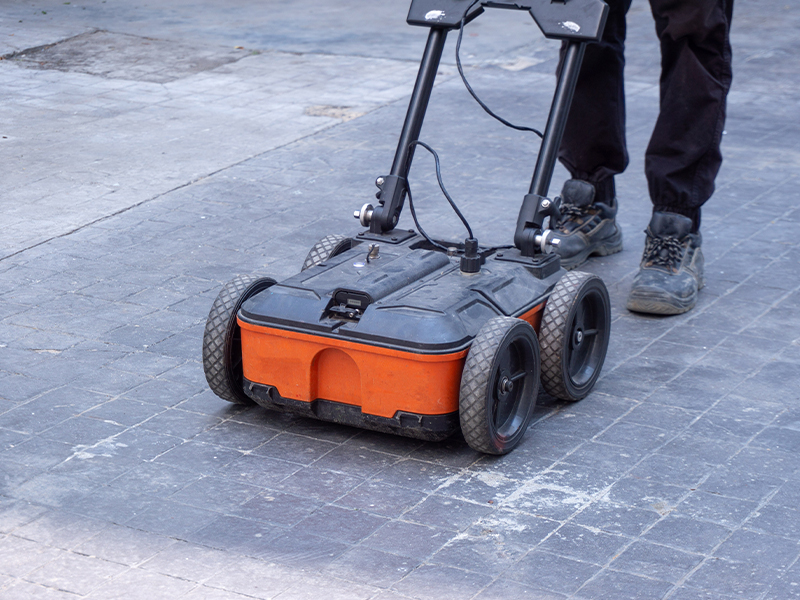
Hidden defects, misplaced reinforcement, and unmarked utilities can lead to serious structural failures if not detected in advance. This is why modern projects demand precise concrete imaging before any intrusive work begins. In this guide, we explore how concrete scanning and imaging help prevent structural failures, the advantages they offer to contractors, and why choosing a specialized service provider like Accurate Survey ensures safer, smarter, and more reliable project execution.
What Is Concrete Scanning?
Concrete scanning is a non-destructive testing (NDT) method used to detect and map hidden elements within concrete structures before any drilling, cutting, coring, or demolition work begins. Instead of breaking or damaging the structure, advanced technologies such as Ground Penetrating Radar (GPR), Ultrasonic Pulse Velocity (UPV), Impact Echo, and Infrared Thermography are used to “see” inside the concrete and provide accurate, real-time information.
By using these tools, contractors can identify:
- Reinforcement steel (rebar)
- Post-tension and pre-tension cables
- Electrical conduits and plumbing lines
- Voids, honeycombing, and air pockets
- Cracks and delamination
- Changes in slab thickness
- Embedded objects or foreign materials
Concrete scanning ensures that intrusive work does not compromise the load-bearing capacity of the structure or endanger workers on-site. It is now considered a critical safety and quality control practice in the UAE’s construction industry, particularly for high-rise buildings, commercial facilities, infrastructure projects, and renovation works.
Key Concrete Imaging Technologies
Ground-Penetrating Radar (GPR)
- Best for: locating rebar, post-tension ducts, conduit, voids; mapping reinforcement layout and depth.
- Strengths: fast, non-invasive, good for large areas, produces 2D/3D maps.
- Limitations: performance is influenced by concrete moisture, aggregate type, and depth.
Ultrasonic Pulse Velocity (UPV) & Impact Echo
- Best for: detecting delamination, internal cracking, and measuring concrete quality.
- Strengths: sensitive to cracks and separation, good for thickness and defect detection.
- Limitations: requires coupling/contact; more point-based than area scans.
Infrared Thermography (IR)
- Best for: detecting delamination, voids, and moisture near surfaces (especially under finishes).
- Strengths: quick area scans, non-contact.
- Limitations: depth penetration limited; requires thermal contrast (sun, heating).
Concrete X-ray / Radiography
- Best for: precise detection of dense features and locating post-tension cables and rebar when absolute clarity is needed.
- Strengths: high-resolution image of internal structures.
- Limitations: involves radiation safety requirements used selectively.
Combined / Multi-method Approach
Using two or more methods (e.g., GPR + UPV) increases reliability and reduces false positives, the industry standard for high-risk or critical structures.
Why Hidden Defects Lead to Failures
Hidden problems that imaging uncovers include:
- Misplaced or corroded reinforcement (rebar) and post-tension cables
- Void pockets and honeycombing from poor casting
- Delamination and hidden cracks that compromise load paths
- Unmapped embedded services (pipes, conduits) that, if struck, cause secondary failures
- Moisture pockets and chloride intrusion are accelerating corrosion
Striking or removing reinforcement, cutting a post-tension cable, or missing a void behind finish surfaces can trigger partial collapse, costly structural repairs, or serious safety incidents. Imaging reduces uncertainty and prevents these outcomes.
How Imaging Prevents Failures – Direct Benefits for Contractors
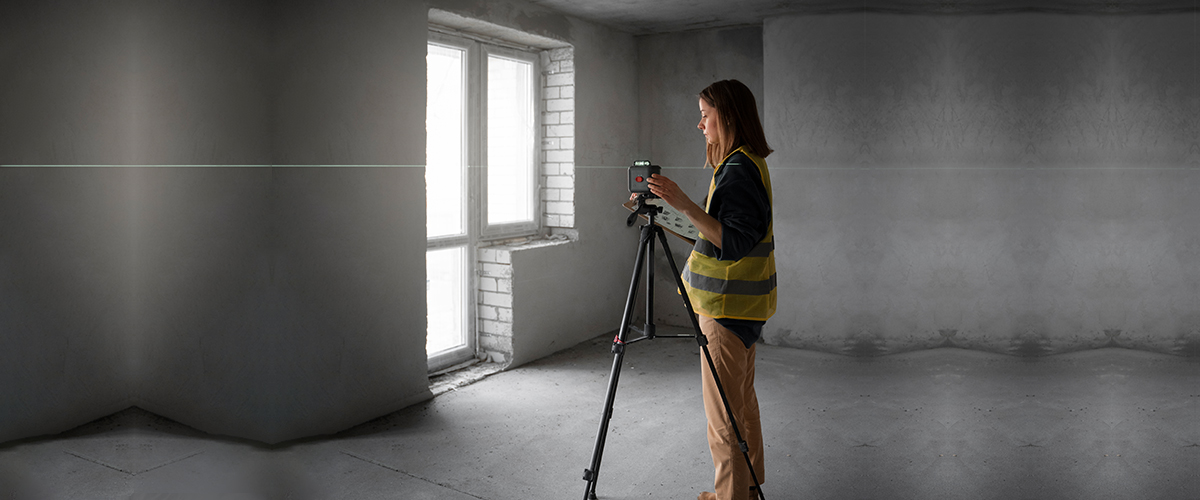
- Prevents accidental cut/strike of reinforcement or tendons – eliminates catastrophic releases of stored energy (post-tension tendons).
- Avoids undermining structural capacity by identifying load-bearing elements and defects before alterations.
- Reduces rework and repair costs, accurate detection means correct first-time execution.
- Protects workers and occupants, prevents unexpected collapses and hazardous exposures.
- Improves decision-making by making objective data support design modifications, repair specifications, and safety plans.
- Supports compliance & documentation reports and imagery to help satisfy client, regulator, and QA requirements.
Typical Contractor Workflow for Concrete Imaging
- Scope & Risk Assessment
- Define area, purpose (cutting, coring, reinforcement mapping), and acceptable risk.
- Pre-survey preparation
- Remove loose debris, note surface finishes, mark access and safety zones.
- On-site scanning
- Use GPR for layouts, UPV/Impact Echo for internal defects, IR for surface delams.
- Data processing & interpretation
- Expert analysis to convert scans into actionable plans (2D plan, 3D model, depth readings).
- Marking & reporting
- Physical on-site marking, annotated drawings, and a clear report with next-step recommendations.
- Execution with controls
- The contractor performs cutting/coring with scan guidance and verification monitoring (e.g., live checks).
- Post-work verification
- Optional rescans to confirm no unintended damage and to validate repairs.
Best Practices Contractors Should Adopt
- Always scan before drilling, coring, sawing, or installing new services.
- Use multi-method NDT for critical structures or where GPR signals are ambiguous.
- Request depth and layout outputs, not just spot checks.
- Keep an up-to-date as-built reinforcement map for future works.
- Ensure the NDT provider supplies site markings, CAD/PDF plans, and a clear limitation/accuracy statement.
- For post-tensioned slabs, insist on specialist technologists; these are high-risk elements.
- Maintain records in BIM or asset management for future works.
Why Choose Accurate Survey for Concrete Scanning & Imaging in the UAE
Selecting the right concrete scanning and imaging partner is crucial for maintaining safety, precision, and efficiency on any construction or demolition project. Accurate Survey stands out as a trusted provider in the UAE, delivering reliable, high-quality non-destructive testing (NDT) services backed by advanced technology and industry expertise. Here’s what makes Accurate Survey the preferred choice for contractors, consultants, and facility managers:
1. High-Resolution GPR Mapping (2D & 3D)
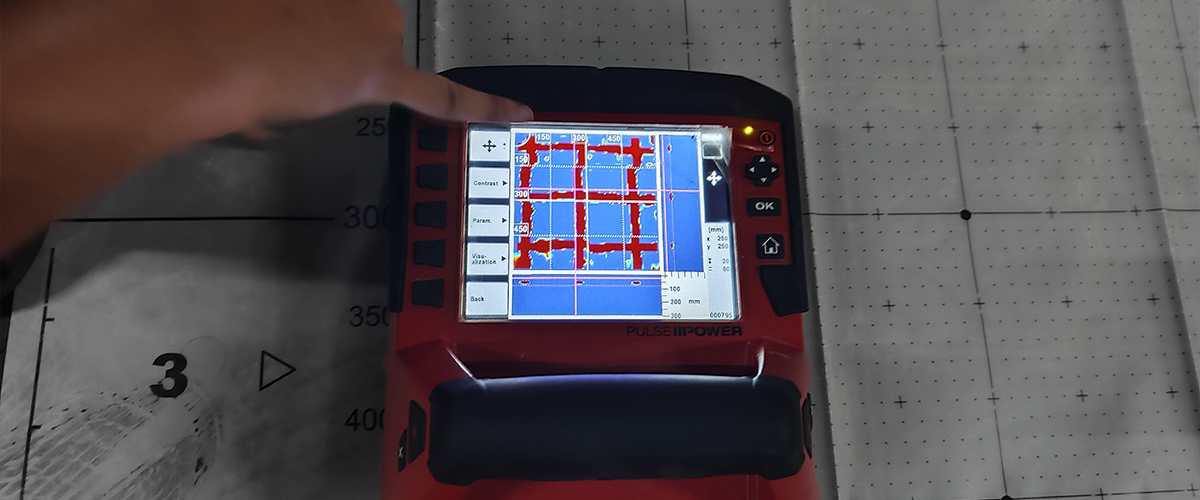
Accurate Survey uses advanced Ground Penetrating Radar systems to produce detailed 2D and 3D maps of structural elements. These maps include depth readings, reinforcement layout, PT cable paths, and slab thickness, allowing contractors to make informed decisions before drilling, coring, or cutting.
2. Precise Detection of Rebar, Post-Tension Cables & Embedded Services
Our scans clearly identify rebar locations, spacing, ducts, conduits, and PT tendons, helping prevent accidental strikes and potential structural compromise. Every finding is marked with pinpoint accuracy both onsite and in digital reports.
3. Multi-Method NDT Interpretation (UPV, Impact Echo & More)
When required, Accurate Survey supplements GPR with Ultrasonic Pulse Velocity (UPV) and Impact Echo testing to assess internal defects such as voids, honeycombing, and delamination. This multi-technology approach ensures a more complete and reliable understanding of the structure.
4. Infrared Thermography for Surface & Near-Surface Defects
For detecting moisture pockets, delamination, or temperature-based anomalies, we provide thermal imaging outputs that clearly highlight issues not visible on the surface. This is particularly useful for finished areas and large slab sections.
5. Clear On-Site Markings & Professional CAD/PDF Reports
Every survey includes:
- On-site markings using paint or tape
- Accurate CAD/PDF drawings showing reinforcement, slab thickness, and no-go zones
- Visual references and annotations for easy interpretation
This ensures your team can proceed with confidence and follow a safe, guided work plan.
6. Executive Summary with Risk Assessment
Each project includes a concise but thorough executive summary, outlining key findings, risk levels, and practical recommendations for safe execution. This helps project managers and contractors move forward without uncertainty.
7. Complete Documentation, Photos & QA Assurance
Accurate Survey provides:
- Site photos
- Scan screenshots
- Raw data files (on request)
- A formal Quality Assurance statement ensuring the accuracy and reliability of the results
This level of documentation is invaluable for compliance, audits, and future maintenance planning.
The future of concrete scanning is advancing quickly, with AI-driven analysis, automation, and innovative NDT tools improving accuracy, safety, and speed across construction projects. In fast-growing cities like Abu Dhabi and Dubai, using modern concrete imaging technologies is essential for avoiding structural risks and ensuring precise execution.
At Accurate Survey, we combine advanced equipment with expert analysis to provide reliable, high-quality concrete scanning and imaging solutions tailored to the UAE’s construction needs.
Book a consultation today to see how Accurate Survey can help you complete your project safely, efficiently, and with total confidence.