

In the UAE’s fast-paced construction environment, skipping a demarcation survey isn’t just risky; it can lead to legal disputes, project delays, and costly rework. Whether you’re a developer, contractor, or landowner, understanding how demarcation surveys work (and why authorities require them) is critical before breaking ground.
Table of Contents
ToggleWhat Is a Demarcation Survey?
A demarcation survey is the process of physically marking property boundaries on-site based on approved land records and coordinates. It ensures that construction happens strictly within legally defined limits. In cities like Dubai and Abu Dhabi, where land parcels are tightly regulated, even a minor boundary error can result in penalties or project stoppage.Why Demarcation Surveys Are Mandatory in the UAE
Authorities across the UAE enforce demarcation surveys before issuing construction permits. Here’s why:- Legal Compliance: Prevents encroachment on adjacent plots or government land
- Authority Approval: Required by bodies like Dubai Municipality and Abu Dhabi Municipality
- Accurate Construction Planning: Ensures design aligns with actual site boundaries
- Avoiding Disputes: Eliminates conflicts with neighboring property owners
- Project Safety: Reduces risks during excavation and foundation work
Step-by-Step Demarcation Survey Process
Understanding the process helps you plan timelines and avoid approval delays.1. Document Collection & Verification
Surveyors review title deeds, plot plans, and municipality records to confirm legal boundaries.2. Authority Coordination
Necessary approvals or NOCs are obtained from relevant authorities before fieldwork begins.3. Site Survey Using Advanced Equipment
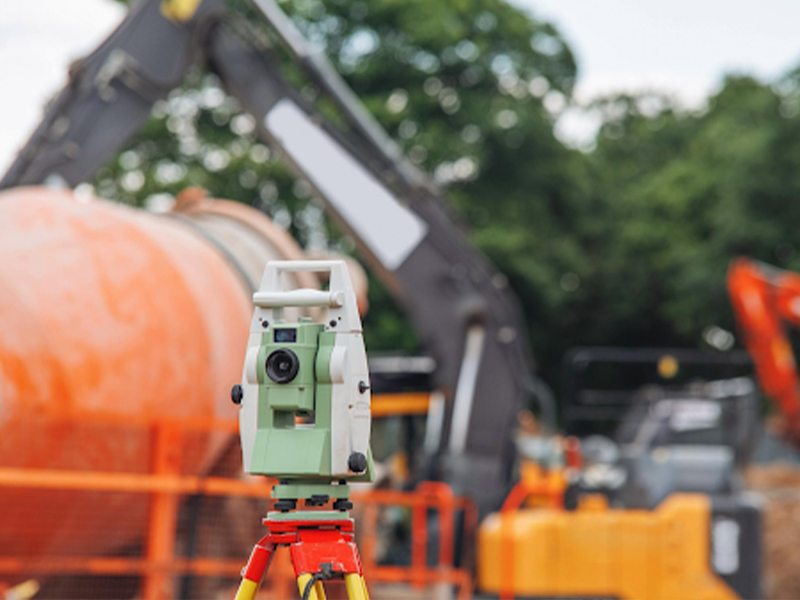
Using GPS, total stations, and GIS tools, surveyors locate exact boundary coordinates on-site.4. Physical Boundary Marking
Markers (pegs, stakes, or concrete points) are placed to define plot limits clearly.5. Final Survey Report Submission
A detailed report is prepared and submitted for authority validation and construction approval.When Do You Need a Demarcation Survey?
A demarcation survey is essential at multiple stages of a property’s lifecycle, not just before construction. You should conduct one when:- Starting a new construction project: Before any design or excavation begins, ensure your building is positioned within approved plot limits and complies with authority regulations.
- Purchasing or selling land: To verify exact boundary lines and avoid future ownership disputes or legal complications during the transaction.
- Planning boundary fencing, wall construction, or excavation: To prevent encroachment onto neighboring plots or government land, especially in tightly regulated areas like Dubai.
- Resolving property or boundary disputes: A certified survey provides legally recognized evidence to settle conflicts between adjacent landowners.
- Applying for building permits or authority approvals: Required by authorities such as Dubai Municipality to validate site boundaries before issuing approvals.
- Subdividing or merging land plots: To accurately redefine new boundaries and ensure proper registration with land departments.
- Before infrastructure or utility work: To confirm that pipelines, drainage, and other utilities are installed within the correct property limits.
Key Authority Approvals Required
In the UAE, demarcation surveys must align with approvals from:- Dubai Municipality
- Abu Dhabi Municipality
- Sharjah Municipality
- Local planning and land departments
Risks of Skipping a Demarcation Survey
Skipping this step can result in major consequences:- Construction on the wrong plot
- Legal notices or fines
- Project delays or shutdowns
- Increased costs due to rework
- Difficulty in obtaining completion certificates
How Accurate Survey Engineering Helps
At Accurate Survey Engineering, we deliver reliable and authority-compliant demarcation survey services across the UAE, helping you move forward with confidence. We ensure:- Full compliance with municipality regulations: Our surveys align with requirements from authorities such as Dubai Municipality, reducing the risk of rejections or delays.
- Efficient approval coordination: We streamline the process by handling necessary documentation and authority interactions for faster approvals.
- High-precision boundary marking: Using advanced surveying technology, we accurately define and mark your plot boundaries on-site.
- Comprehensive, approval-ready documentation: We provide detailed reports that support permit applications and serve as a reliable reference throughout your project.
When Do You Need a Demarcation Survey?
You should conduct a demarcation survey if you are:- Starting a new construction project
- Purchasing or selling land
- Planning boundary fencing or excavation
- Resolving property disputes
- Applying for building permits
Common Mistakes to Avoid in Demarcation Surveys
Even small oversights in a demarcation survey can lead to major legal and financial consequences. Below are some of the most common mistakes to avoid:- Skipping the survey altogether: Proceeding without a demarcation survey can result in boundary violations, fines, or project stoppage, especially in regulated areas like Dubai.
- Relying on outdated or incorrect documents: Using old plot plans or unverified data can result in inaccurate boundary marking and may lead to approval rejections from authorities such as Dubai Municipality.
- Hiring unapproved or inexperienced surveyors: Not working with a qualified, authority-recognized survey company can result in non-compliant reports that may not be accepted.
- Ignoring authority approvals and NOCs: Skipping required approvals before conducting the survey can delay your project timeline and complicate permit applications.
- Not verifying boundary markings on-site: Failing to cross-check physical markers can lead to construction errors and potential disputes with neighboring properties.
- Delaying the survey until construction begins: Conducting a demarcation survey too late can cause redesigns, rework, and increased costs.
- Overlooking coordination with other surveys: Not aligning demarcation with topographic or utility surveys can create inconsistencies during project execution.
Demarcation Survey vs Topographic Survey
| Aspect | Demarcation Survey | Topographic Survey |
|---|---|---|
| Purpose | Defines legal property boundaries | Maps physical land features |
| Focus | Plot limits, boundary lines, ownership | Elevation, contours, structures, utilities |
| Output | Boundary markers placed on-site | Detailed site map for design |
| Use Stage | Before construction or land transactions | During planning and design phase |
| Authority Requirement | Mandatory for approvals from bodies like Dubai Municipality | Required for design validation and engineering plans |
| Key Benefit | Prevents legal disputes and encroachment | Supports accurate project design and execution |
Secure Your Project with Accurate Demarcation
A demarcation survey is a critical first step for any land or construction project in the UAE. It ensures your project stays within legal boundaries, meets authority requirements, and avoids costly disputes or delays. By working with experienced professionals like Accurate Survey Engineering, you can move forward with confidence knowing your project is accurate, compliant, and built on a solid foundation.Frequently Asked Questions
A demarcation survey is the process of identifying and physically marking the legal boundaries of a land plot based on approved records and coordinates.
A general land survey collects and measures site data (such as features and levels), while a demarcation survey specifically focuses on defining and marking property boundaries.
Yes, it is often required by authorities like Dubai Municipality before issuing construction permits or approvals.
Typically, it takes 1-5 working days depending on the plot size, site conditions, and approval process.
Property owners, developers, contractors, and buyers/sellers of land all require demarcation surveys at different stages of a project.
Skipping it can lead to boundary disputes, legal penalties, project delays, and costly rework.
Yes, they provide legally recognized boundary evidence that can help resolve disputes between neighboring landowners.